Here are the following blogs that I have posted:
- Michael Shin
- Eric Kang
- Hannah Jang
- Young Jo Byun
- Peter Kim
- Evie Lee
2008년 4월 8일 화요일

#6 Current Situations

Q: are there any current situations in the world that relate to the novel? What are they, and how do they relate? Does the novel shed any light on how current situations could be resolved or “fixed”?
Current Situations

Yes, there is a current situation in North Korea that relate to the Animal Farm. Kim Jung Il who resembles Napoleon strictly doesn’t allow the North Korean to express their opinion freely. People who were not North Koreans witnessed that starvation, forced labors, and murder happened in detention camps. It has been estimated that 2 million North Korean has been killed by Kim Jung Il. One of the non-North Korean guard testified that chemical weapons were tested on the prisoners in a gas chamber. Also, women who were pregnant were either forced to have abortion or the new born baby would be killed; nevertheless, Kim Jung Il denied this testimony.
How do they relate?
Current Situations

Yes, there is a current situation in North Korea that relate to the Animal Farm. Kim Jung Il who resembles Napoleon strictly doesn’t allow the North Korean to express their opinion freely. People who were not North Koreans witnessed that starvation, forced labors, and murder happened in detention camps. It has been estimated that 2 million North Korean has been killed by Kim Jung Il. One of the non-North Korean guard testified that chemical weapons were tested on the prisoners in a gas chamber. Also, women who were pregnant were either forced to have abortion or the new born baby would be killed; nevertheless, Kim Jung Il denied this testimony.
How do they relate?
I think this current situation relates the novel. North Korea has been a communist country since after World War 2, and when Korea was splitted into two countries, North Korea has become like a heir of Soviet Union. No communist countries were worse than North Korea, because the political rules were brutal than any other communist countries. Kim Jung Il is in the Napoleon’s status. The citizens in North Korea regard him as their “God” as the animal did to Napoleon. Animals who opposed Napoleon his nine hounds would threat animals who argue against the issue. Kim Jung Il and Napoleon both tend to cover up the weaknesses, in other words, they put a mask to conceal the truth. When it was the storm that destroyed the windmill, Frederick and Pilkington assumed the wall weren’t built strong. Napoleon denied the fact but intentionally said it was done by Snowball. After reading this novel, I was horrified to think how North Korea’s situation can be the same as Animal Farm. I found North Korea is a perfect example to relate Animal Farm.
Does the novel shed any light on how current situations could be resolved or “fixed”?
Does the novel shed any light on how current situations could be resolved or “fixed”?
 The novel shows a clear understanding of the story but no it doesn’t show any light on how current situations could be resolved or “fixed”. The author shows the story dark and hopeless. As the story goes on, the mood becomes ironic and disappointing. When there is a dictatorship, no people can rebel. The novel point out the situations more worse.
#5 Theme

Q: What is the major theme of this novel? Why is this theme important to a teenager living in 2008?
I think the major theme is about the power and the corruption. Does power really corrupt? Yes, only the power will greatly depend on the person, not the power itself. A person who is not obsessed with power does not seek. Most of the time, it seems power can transform an honest and sincere person into a corrupted crime. I agree at some point that power is a part of human desire and it can corrupt our life. Absolute power was Napoleon’s biggest appetite. So he orders his dogs to chase Snowball which is a worse crime to do, and succeeds becoming a dictator of the Animal Farm. Napoleon develops ‘good’ laws, which he considers they are ‘good to the animals’. However, he imposes the laws by using forces (nine dogs) to make the animals agree his idea or belief such as the purpose for purging and expelling Snowball. As Napoleon gained an absolute power he became morally corrupted. As someone told me, “great power comes great responsibilities” – which is from Uncle Ben Parker. I want to say that all powers tend to corrupt; but absolute power will corrupt absolutely! No one can rule equally.
This theme is important to a teenager because we easily get to things we aren’t supposed to do but do it anyways such as drugs, smokes, and Sudden Attack without parent’s permission. We have the freedom of choice to get contact with these things but the more we do we cannot stop our ‘appetite’ for such addictive substances. Even people who were sincere can be absorbed to bad stuff. ‘Greed’ is the nature that can lead us to a wrong path and does not teach us strong will.
I think the major theme is about the power and the corruption. Does power really corrupt? Yes, only the power will greatly depend on the person, not the power itself. A person who is not obsessed with power does not seek. Most of the time, it seems power can transform an honest and sincere person into a corrupted crime. I agree at some point that power is a part of human desire and it can corrupt our life. Absolute power was Napoleon’s biggest appetite. So he orders his dogs to chase Snowball which is a worse crime to do, and succeeds becoming a dictator of the Animal Farm. Napoleon develops ‘good’ laws, which he considers they are ‘good to the animals’. However, he imposes the laws by using forces (nine dogs) to make the animals agree his idea or belief such as the purpose for purging and expelling Snowball. As Napoleon gained an absolute power he became morally corrupted. As someone told me, “great power comes great responsibilities” – which is from Uncle Ben Parker. I want to say that all powers tend to corrupt; but absolute power will corrupt absolutely! No one can rule equally.
This theme is important to a teenager because we easily get to things we aren’t supposed to do but do it anyways such as drugs, smokes, and Sudden Attack without parent’s permission. We have the freedom of choice to get contact with these things but the more we do we cannot stop our ‘appetite’ for such addictive substances. Even people who were sincere can be absorbed to bad stuff. ‘Greed’ is the nature that can lead us to a wrong path and does not teach us strong will.
#4 Mood
Q: What is the mood of this novel? Do you find this novel saddens you in any way? Why?

I find this novel greatly disappointing. When Old Major gave a speech before he died, I thought the pigs seem to be trustworthy and honest. I realized that the fact they wanted to be powerful. The pigs were being selfish and disobey about equality with animals. They take the milk and puppies for explaining they are important and be better in the pig’s care, however, the real intention is the greed and selfishness that cause them to do. They controlled animals by using persuading them. For example, I would have felt disappointed when they got my money because they needed it. I also felt unpleasant when Napoleon kicked out Snowball and becoming the single ruler. I wished the debate would’ve end when either Napoleon or Snowball accepts other’s opinion. The climax didn’t make me feel happy. As the story goes on, the pigs do things that disappointed me more.

Also, some scenes that followed the mood were ironic. After three weeks of Snowball’s expulsion, Napoleon changed his plan to Snowball’s plan. I questioned, “Why did Napoleon changed his plan? If he did not disagree utterly about Snowball’s plan, why did Napoleon disagreed and wanted to kick Snowball out so badly?” These were quite the opposite. Squealer states that Snowball was a criminal. Also, there was a part when it was the storm that blew down the windmill; Napoleon said that Snowball destroyed it. I had lots of questions about the ironic situations that can’t be answered.Yes, I find this novel sad without understanding the real answers that I questioned above. I found this novel very sad I wanted to stop reading it. Many ironic situations were difficult to answer. As the story develops until the end, the mood was the point where it made me feel down. Overall, the mood of irony and disappointment was the same at the end.
I find this novel greatly disappointing. When Old Major gave a speech before he died, I thought the pigs seem to be trustworthy and honest. I realized that the fact they wanted to be powerful. The pigs were being selfish and disobey about equality with animals. They take the milk and puppies for explaining they are important and be better in the pig’s care, however, the real intention is the greed and selfishness that cause them to do. They controlled animals by using persuading them. For example, I would have felt disappointed when they got my money because they needed it. I also felt unpleasant when Napoleon kicked out Snowball and becoming the single ruler. I wished the debate would’ve end when either Napoleon or Snowball accepts other’s opinion. The climax didn’t make me feel happy. As the story goes on, the pigs do things that disappointed me more.
Also, some scenes that followed the mood were ironic. After three weeks of Snowball’s expulsion, Napoleon changed his plan to Snowball’s plan. I questioned, “Why did Napoleon changed his plan? If he did not disagree utterly about Snowball’s plan, why did Napoleon disagreed and wanted to kick Snowball out so badly?” These were quite the opposite. Squealer states that Snowball was a criminal. Also, there was a part when it was the storm that blew down the windmill; Napoleon said that Snowball destroyed it. I had lots of questions about the ironic situations that can’t be answered.Yes, I find this novel sad without understanding the real answers that I questioned above. I found this novel very sad I wanted to stop reading it. Many ironic situations were difficult to answer. As the story develops until the end, the mood was the point where it made me feel down. Overall, the mood of irony and disappointment was the same at the end.
#3 Climax

Q: what is the climax of this novel? What happens? How do the events of this novel make you feel?
The main climax was the end of driving Snowball out and Napoleon becoming the leader of the Animal Farm. There was a debate over the meeting between Snowball and Napoleon. Snowball insisted a windmill construction for the future again. When Napoleon shouted nine enormous dogs came into the barn and chased for Snowball, and Snowball runs away from the farm. The nine dogs Napoleon took from Jessie’s became untamed beasts. The animals became terrified and silent. The dogs growl when one of the animals open its mouth to speak the Snowball’s expulsion. When Snowball was gone Napoleon declared himself a supreme ruler over the Animal Farm. Squealer explained the animals that Napoleon is making a great sacrifice in taking the leadership. Ironically, he explains Snowball was a traitor and a criminal. The animals were convinced and calm. They came to accept everything Snowball mentioned.
The events of this novel made me feel as if it was almost at the end. I felt a little bit unsatisfied or sour, because it wasn’t the type of conflict that I normally perceived. Most literature at the climax, it would be the protagonist who wins over the antagonist. After all, I felt confused and questioned. Is Napoleon supposed to be an antagonist or what? I thought the author didn’t consider who was the antagonist or the protagonist. I felt sad for Snowball who failed to win the debate, and get kicked out. I would have thought Snowball would have been the protagonist after all for he never thought of a strategy to expel Napoleon. I was curious to see if Napoleon would break the Seven Commandments and become a ruthless dictator like Stalin.
The main climax was the end of driving Snowball out and Napoleon becoming the leader of the Animal Farm. There was a debate over the meeting between Snowball and Napoleon. Snowball insisted a windmill construction for the future again. When Napoleon shouted nine enormous dogs came into the barn and chased for Snowball, and Snowball runs away from the farm. The nine dogs Napoleon took from Jessie’s became untamed beasts. The animals became terrified and silent. The dogs growl when one of the animals open its mouth to speak the Snowball’s expulsion. When Snowball was gone Napoleon declared himself a supreme ruler over the Animal Farm. Squealer explained the animals that Napoleon is making a great sacrifice in taking the leadership. Ironically, he explains Snowball was a traitor and a criminal. The animals were convinced and calm. They came to accept everything Snowball mentioned.
The events of this novel made me feel as if it was almost at the end. I felt a little bit unsatisfied or sour, because it wasn’t the type of conflict that I normally perceived. Most literature at the climax, it would be the protagonist who wins over the antagonist. After all, I felt confused and questioned. Is Napoleon supposed to be an antagonist or what? I thought the author didn’t consider who was the antagonist or the protagonist. I felt sad for Snowball who failed to win the debate, and get kicked out. I would have thought Snowball would have been the protagonist after all for he never thought of a strategy to expel Napoleon. I was curious to see if Napoleon would break the Seven Commandments and become a ruthless dictator like Stalin.
#2 Entry of my choice
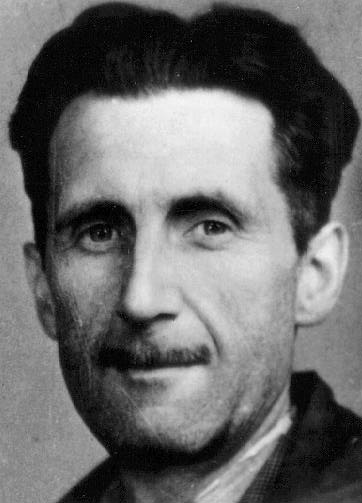
Biography of George Orwell: Who was this person?
Who was George Orwell? A: An author of the Animal Farm and 1984? Yes, but he was more a British political novelist and essayist who criticized the political oppression in the mid-twentieth century. He was born in a place called Bengal in India. His families were in the position of “lower-upper middle class”. Orwell moved back to England in 1904 so that the children could be brought up in a Christian environment.
He went to public school for his entire life. In 1917, he went to Eton, which was one of an elite private collage in England. During this period, this college can led directly to a higher educations. Experienced with vanity and social elitism at Eton, it made him feel suspicious of the English class system which was strict. In 1922, he returned to India and joined the Indian Imperial Police. He experiences real poverty in India. Not happy when the Indian Imperial Police were criticized badly he returned to England in 1927. He saw the street full of poor as it relates what happened in India. In 1929, he became a private school teacher. Orwell had time to write and published many stories.
Orwell became a socialist. He spoke openly against the conflicts and problems. Unlike many British socialists, he viewed the Soviet Union socialist society and its policies as negative during 1930s and 1940s. Orwell became an activist against the communist oppression. He published two greatest anti-totalitarian novels: Animal Farm and 1984. Soon after the Animal Farm was published, he became famous. With lots of fans, he moved to an island of Jura, the coast of Scotland. While at Jura, George wrote his last famous novel: 1948. He died in 1950, only a year after completing 1984 from tuberculosis.
http://www.sparknotes.com/lit/animalfarm/context.html
http://www.gradesaver.com/classicnotes/authors/about_george_orwell.html
Who was George Orwell? A: An author of the Animal Farm and 1984? Yes, but he was more a British political novelist and essayist who criticized the political oppression in the mid-twentieth century. He was born in a place called Bengal in India. His families were in the position of “lower-upper middle class”. Orwell moved back to England in 1904 so that the children could be brought up in a Christian environment.
He went to public school for his entire life. In 1917, he went to Eton, which was one of an elite private collage in England. During this period, this college can led directly to a higher educations. Experienced with vanity and social elitism at Eton, it made him feel suspicious of the English class system which was strict. In 1922, he returned to India and joined the Indian Imperial Police. He experiences real poverty in India. Not happy when the Indian Imperial Police were criticized badly he returned to England in 1927. He saw the street full of poor as it relates what happened in India. In 1929, he became a private school teacher. Orwell had time to write and published many stories.
Orwell became a socialist. He spoke openly against the conflicts and problems. Unlike many British socialists, he viewed the Soviet Union socialist society and its policies as negative during 1930s and 1940s. Orwell became an activist against the communist oppression. He published two greatest anti-totalitarian novels: Animal Farm and 1984. Soon after the Animal Farm was published, he became famous. With lots of fans, he moved to an island of Jura, the coast of Scotland. While at Jura, George wrote his last famous novel: 1948. He died in 1950, only a year after completing 1984 from tuberculosis.
http://www.sparknotes.com/lit/animalfarm/context.html
http://www.gradesaver.com/classicnotes/authors/about_george_orwell.html
#1 Main Characters
Q: who are the main characters in the novel? do you like them? why or why not? what is special about them? what do they reveal about the universal human experience?

Napoleon
He is the pig who resembles Joseph Stalin in this allegory. Napoleon is the most important character and seems to be an antagonist. I do not like this guy because he is ruthless and dictatorial. Napoleon takes the milk and the puppies in his own care. Then the puppies he bred Napoleon makes them his own bodyguards. He was is mostly planned before the situation happens. There is a debate with Snowball and Napoloeon over the future plan, which split between the construction of windmill and increasing the rations. When Napoleon starts to lose in debate he command his dogs and drive away Snowball. I can see Napoleon want power and rule over them. Even the storm destroy the wall of the windmill's construction, he denies the fact the it was the storm that destroy it but says Snowball destroy it. He didn't want animals to be disappointed. He becomes corrupted when Napoleon breaks the Seven Commandments. He acts as a human. Napoloeon reveals that when he has the absolute power to control, the dictator becomes corrupted. No one can be higher and stronger than a dictator since absolute power controls everything.

Snowball
Snowball resembles Leon Trotsky which was Stalin's rivalry. Snowball seems to be a protagonist and does not come in the novel after he escape. I relatively prefer this guy than Napoleon. His strong, rhetoric speech inspired me. Snowball wasn't the pig who try to kick Napoleon out. Snowball is an idealistic pig. He was the one who wanted to improve the Animal Farm’s infrastructures. Snowball planned for the future to build a windmill. I liked how he invented a windmill plan that will provide convenience and better life to us, though I felt sad Napoleon banished him out. Snowball slightly reveals same human universal experience as Napoleon’s. Because Napoleon desired dictatorial power, the dog chases him and Snowball loses everything. There are people who are intelligent and sincere but they do not get the results they wanted. It is the jealousy and fear that cause us to do worse things.
피드 구독하기:
글 (Atom)